La Reyna Sofia surrounds herself with an entourage of unexpected women. Among them you will find women wrestlers and boxers, virgins and prostitutes. They exist as tiny  figures encased in glass, framed in metal, portraits hung from chains and beads. Sofia’s women are miniature works of art. And they have been her obsession these past five years.
“Why women?” I ask.
“I love everything about my women,” says Reyna Sofia Canales Orguayo. “I believe that when I paint a woman – her clothes, her boots, all of the details – I can make her come alive.” Indeed, you can appreciate the attention to detail when you turn over a pendant or earring: each of her women has a back, as well as a front.
Sofia works in pastels, water colours, tempura and ink. The women in her paintings and jewelry are bathed in a rainbow of colour.
 “Lots of colours – to create a sense of happiness,” she says.
The 30-year-old artist and her husband Luis Carlos Rojo came to La Paz from Mazatlán a year ago. Luis Carlos is also an artist, an engraver. They have a two-year-old son.
Sofia smiles when I ask about her calling card and the signature on her work: “La Reyna Sofia.” She says her birth name – which means queen – is perfect for what she does. She needs no other title for her work.
Sofia is part of a blossoming art scene in La Paz. Like many other artists and artisans, she sells her work in sidewalk exhibits and new galleries in the centre of the city. If you are looking for hand-crafted gifts this December, here is a starter list of spots to browse, including the places where you will find work by Sofia and her husband.
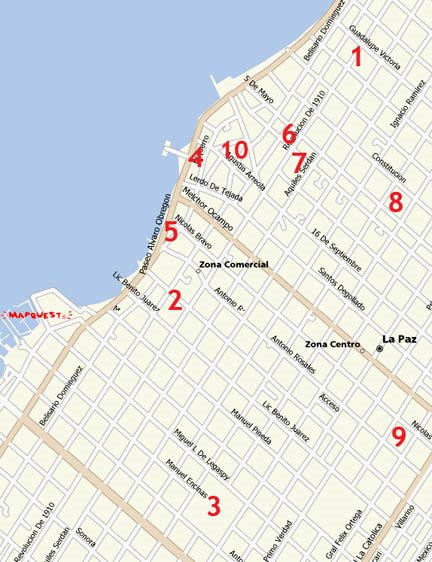
Allende Books of La Paz: Independencia 518, between Serdan and G. Prieto, (612)125 9114. This English-language bookstore also sells some hand-crafted items, including Sofia’s necklaces.
Callejón Cultural: Artists and artisans are exhibiting and selling their work Saturdays 10 a.m. to 6 p.m. in December in the pedestrian lane called 21 de Agosto (next to Dorian’s between 16 de Septiembre and Arreola). The event is sponsored by the city of La Paz. You will find work by Sofia and her husband here.
Casa del Artesano Sudcaliforniano: Exhibit and sale of regional arts and crafts in wood, shell, clay, weaving, cultured pearls and more. Open daily 10 a.m. to 10.p.m., Malecón and Bravo next to the skateboard park. Information: 128-8707.
Galería Pax: Guillermo Prieto 1250 (between 5 de Mayo and Consitución), 121-6853. This is a new gallery, gift shop and cafe. An exhibit of Sofia’s work opens here Dec. 12.
Malecón: the area of the kiosk at the foot of 16 de Septiembre is the site of many events where you will find artisans selling their work. For example, the Sudcaliforniano folkloric festival, Dec. 13, features crafts as well as music, dance, stories, poetry and traditional foods, starting at 8 p.m.
 figures encased in glass, framed in metal, portraits hung from chains and beads. Sofia’s women are miniature works of art. And they have been her obsession these past five years.
“Why women?” I ask.
“I love everything about my women,” says Reyna Sofia Canales Orguayo. “I believe that when I paint a woman – her clothes, her boots, all of the details – I can make her come alive.” Indeed, you can appreciate the attention to detail when you turn over a pendant or earring: each of her women has a back, as well as a front.
Sofia works in pastels, water colours, tempura and ink. The women in her paintings and jewelry are bathed in a rainbow of colour.
 “Lots of colours – to create a sense of happiness,” she says.
The 30-year-old artist and her husband Luis Carlos Rojo came to La Paz from Mazatlán a year ago. Luis Carlos is also an artist, an engraver. They have a two-year-old son.
Sofia smiles when I ask about her calling card and the signature on her work: “La Reyna Sofia.” She says her birth name – which means queen – is perfect for what she does. She needs no other title for her work.
Sofia is part of a blossoming art scene in La Paz. Like many other artists and artisans, she sells her work in sidewalk exhibits and new galleries in the centre of the city. If you are looking for hand-crafted gifts this December, here is a starter list of spots to browse, including the places where you will find work by Sofia and her husband.
Allende Books of La Paz: Independencia 518, between Serdan and G. Prieto, (612)125 9114. This English-language bookstore also sells some hand-crafted items, including Sofia’s necklaces.
Callejón Cultural: Artists and artisans are exhibiting and selling their work Saturdays 10 a.m. to 6 p.m. in December in the pedestrian lane called 21 de Agosto (next to Dorian’s between 16 de Septiembre and Arreola). The event is sponsored by the city of La Paz. You will find work by Sofia and her husband here.
Casa del Artesano Sudcaliforniano: Exhibit and sale of regional arts and crafts in wood, shell, clay, weaving, cultured pearls and more. Open daily 10 a.m. to 10.p.m., Malecón and Bravo next to the skateboard park. Information: 128-8707.
Galería Pax: Guillermo Prieto 1250 (between 5 de Mayo and Consitución), 121-6853. This is a new gallery, gift shop and cafe. An exhibit of Sofia’s work opens here Dec. 12.
Malecón: the area of the kiosk at the foot of 16 de Septiembre is the site of many events where you will find artisans selling their work. For example, the Sudcaliforniano folkloric festival, Dec. 13, features crafts as well as music, dance, stories, poetry and traditional foods, starting at 8 p.m.
Where else: If I've missed a spot you think should be in this list, please send me an e-mail with the information we need to find your suggested place to browse. rozinlapaz@yahoo.com